
Practical outcomes: 5 ways biosolids improve soil health
Healthy soil is about more than the nutrients shown on a test result. It is also about how well the soil stores water, supports plant roots, cycles nutrients and sustains the biological activity that keeps these processes working.
Biosolids can contribute to each of these functions. Produced through the treatment and stabilisation of wastewater solids, biosolids contain organic matter as well as valuable plant nutrients. When the right product is matched to the right soil and land use, and applied in accordance with regulatory and agronomic requirements, those resources can deliver practical benefits for soil health and agricultural productivity.
Here are five ways appropriately managed biosolids can improve soil.
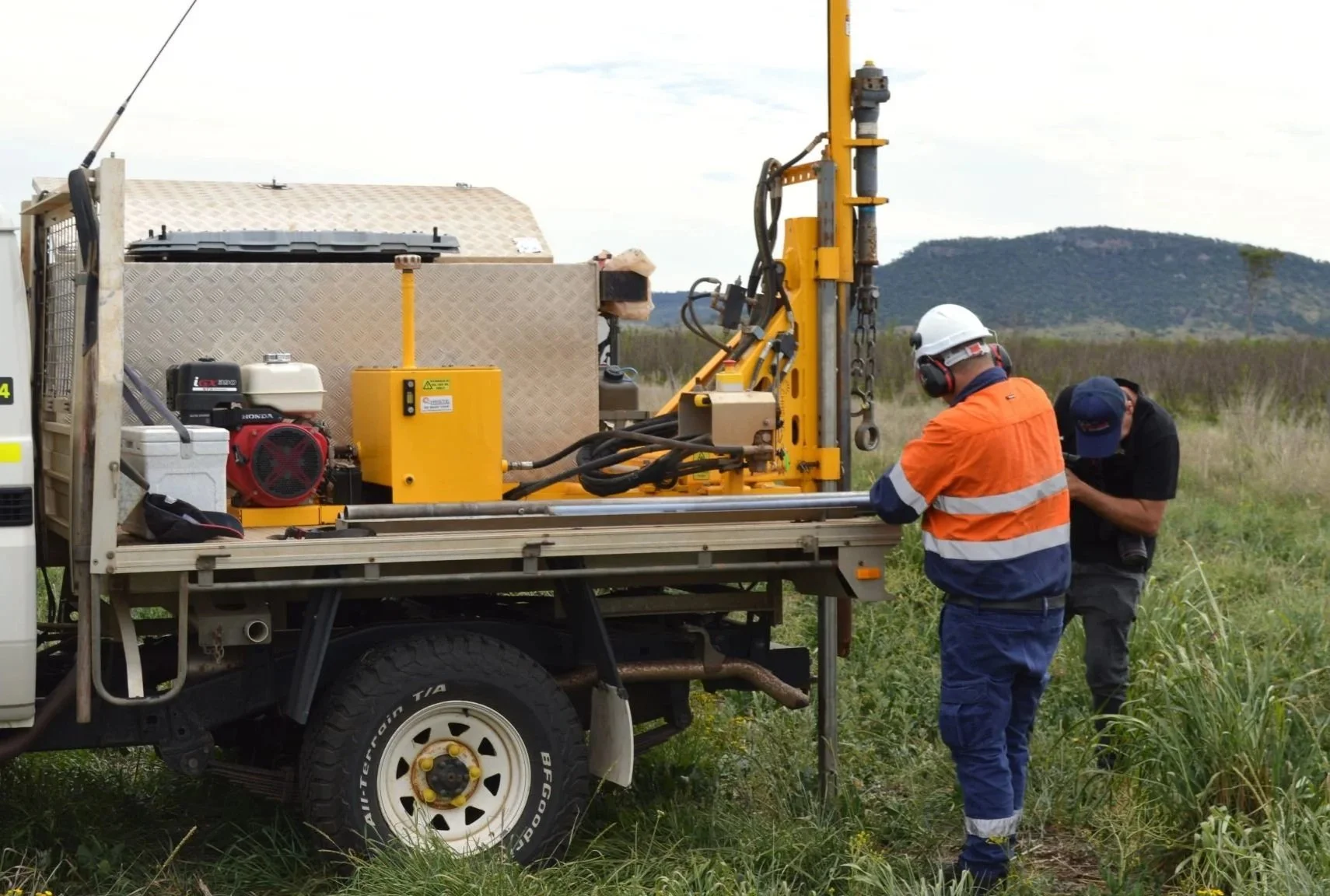
Soil sampling is an important part of any biosolids strategy
1. Better water-holding capacity
Water availability is one of the biggest constraints on plant growth, particularly in dryland farming systems. Increasing soil organic matter can help soil retain more plant-available water, giving crops and pastures greater capacity to make use of rainfall between events.
Biosolids add organic matter directly to the soil. Over time, this can improve the soil's ability to store moisture within the root zone rather than losing it quickly through drainage or evaporation.
A 2025 study examined two long-running biosolids field trials in semi-arid cropping systems in the United States. After more than 20 years of treatment, biosolids increased available water-holding capacity at one trial site, alongside higher soil carbon and nitrogen. The researchers concluded that biosolids can improve important soil functions associated with water storage, although the scale of the response depends on factors including soil texture and the amount applied.
Biosolids do not make soil drought-proof, but it does mean that building organic matter can strengthen one of the soil's most useful natural buffers against variable rainfall.
2. Improved soil structure
Compacted or poorly structured soil can restrict root growth, reduce aeration and make it harder for water to enter and move through the soil profile. Organic matter helps create pore space and supports the physical processes that make soil more workable.
In the same long-term study, biosolids reduced bulk density at one site. Lower bulk density generally indicates less compaction and more space for roots, air and water. Australian industry guidance also identifies improved soil quality and structure as important benefits of land-applied biosolids.
Not every property's soil will respond in the same way. Soil type, existing condition, application rate, incorporation and seasonal conditions all influence the result. This is why soil assessment and site-specific planning matter: biosolids should be used to address the needs and constraints of the receiving soil, not applied as a one-size-fits-all input.
3. More active soil biology

Soil is a living system. Bacteria, fungi and other organisms break down organic material, release nutrients into plant-available forms and contribute to the formation of stable soil aggregates.
By adding organic carbon and nutrients, biosolids can provide resources that support these native soil communities. The 2025 long-term field study found higher microbial biomass at both trial sites following biosolids application. At one site, it also recorded greater activity of enzymes involved in nitrogen and phosphorus cycling.
The practical value is not simply “more microbes”. It is greater biological activity supporting the processes that make nutrients available and help the soil function as a system. As with other benefits, the outcome depends on the characteristics of the biosolids, the soil and how the application is managed.
4. Slow-release nutrition
Biosolids contain valuable plant nutrients including nitrogen and phosphorus, as well as varying amounts of sulphur, calcium, magnesium and micronutrients such as copper, zinc and iron.
Much of their nitrogen is held in organic forms. Rather than being immediately available all at once, it is gradually converted into plant-available forms through microbial mineralisation. The Australian and New Zealand Biosolids Partnership reports that approximately 85% of the nitrogen in biosolids is typically present in slow-release organic form.
Verterra Ecological Engineering nutrient analysis work has similarly found that biosolids can provide nitrogen and phosphorus over an extended period, while also supplying secondary nutrients that may not be present in commonly used nitrogen-phosphorus fertilisers.
Slow release does not mean nutrient supply is automatically aligned with crop demand. Mineralisation is influenced by temperature, moisture, soil conditions and the biosolids treatment process. Product analysis and soil testing are therefore essential to calculate an appropriate application rate and identify any remaining nutrient gaps.
5. Reduced synthetic fertiliser requirements
When nutrients recovered from wastewater are returned to soil, they can supplement or partially replace manufactured fertilisers. This can reduce reliance on newly sourced inputs while keeping existing nutrients in productive use - a practical example of circular agriculture.
The opportunity is to use biosolids as part of a nutrient management plan, rather than treating them as a direct substitute for every fertiliser product. Biosolids nutrient profiles vary, and they may not supply nutrients in the proportions required by a particular crop. Potassium, for example, can remain a limiting nutrient and may need to be applied separately. Soil phosphorus levels and the cumulative effects of repeated applications must also be considered.
The best outcome comes from accounting for the nutrients biosolids will supply, then using targeted fertiliser only where analysis shows it is still needed. This can improve nutrient-use efficiency, reduce unnecessary input costs and avoid over-application.
Click here to view BYV Organics biosolids nutrient profile
Turning a resource into a soil outcome
These five benefits are connected. Organic matter supports water storage and soil physical condition. It also fuels biological activity, which helps release nutrients over time. Those nutrients can then support plant growth while reducing the requirement for additional fertiliser.
But the value is not created by application alone. It depends on understanding the biosolids, the receiving soil, the crop or land use, local conditions and regulatory requirements.
At BYV Organics, every beneficial reuse project starts with evidence. By analysing both the biosolids and the receiving soil, we can match resources to genuine agronomic needs, plan appropriate application rates and manage the process from source to soil.
Because better biosolids management is not simply about finding somewhere for a material to go. It is about putting valuable organic matter and nutrients to work - safely, responsibly and with measurable benefits for the soil.
Sources
Desjardins, M. et al. (2025), Long-term biosolids applications improve key soil health functions for semi-arid dryland systems, Science of the Total Environment, 997, 180130.
Australian and New Zealand Biosolids Partnership, Land application of biosolids.
Verterra Ecological Engineering, Maroochydore Biosolids Nutrient Analysis (2015), supplied background report.